
The Hitchhiker's Guide to the Galaxy
Douglas Adams
A book that grows up with you
I first read The Hitchhiker's Guide to the Galaxy in 1979, aged twelve, after hearing the original BBC radio series through my school's lunchtime science fiction club. Like many readers, I was immediately drawn to its wonderfully absurd humour and unforgettable characters, even if many of the ideas sailed straight over my head at that age.
I devoured the sequels as they were published throughout my teenage years, before they quietly slipped into the background of fond memories as life moved on. School became work, interests changed, responsibilities appeared, and The Hitchhiker's Guide quietly disappeared onto the shelf.
In the early 2000s, I rediscovered the story through Dirk Maggs' radio adaptations. They never quite captured the magic of the original series for me, but they reminded me just how unique Douglas Adams' imagination was. The film adaptation, on the other hand, left me rather underwhelmed.
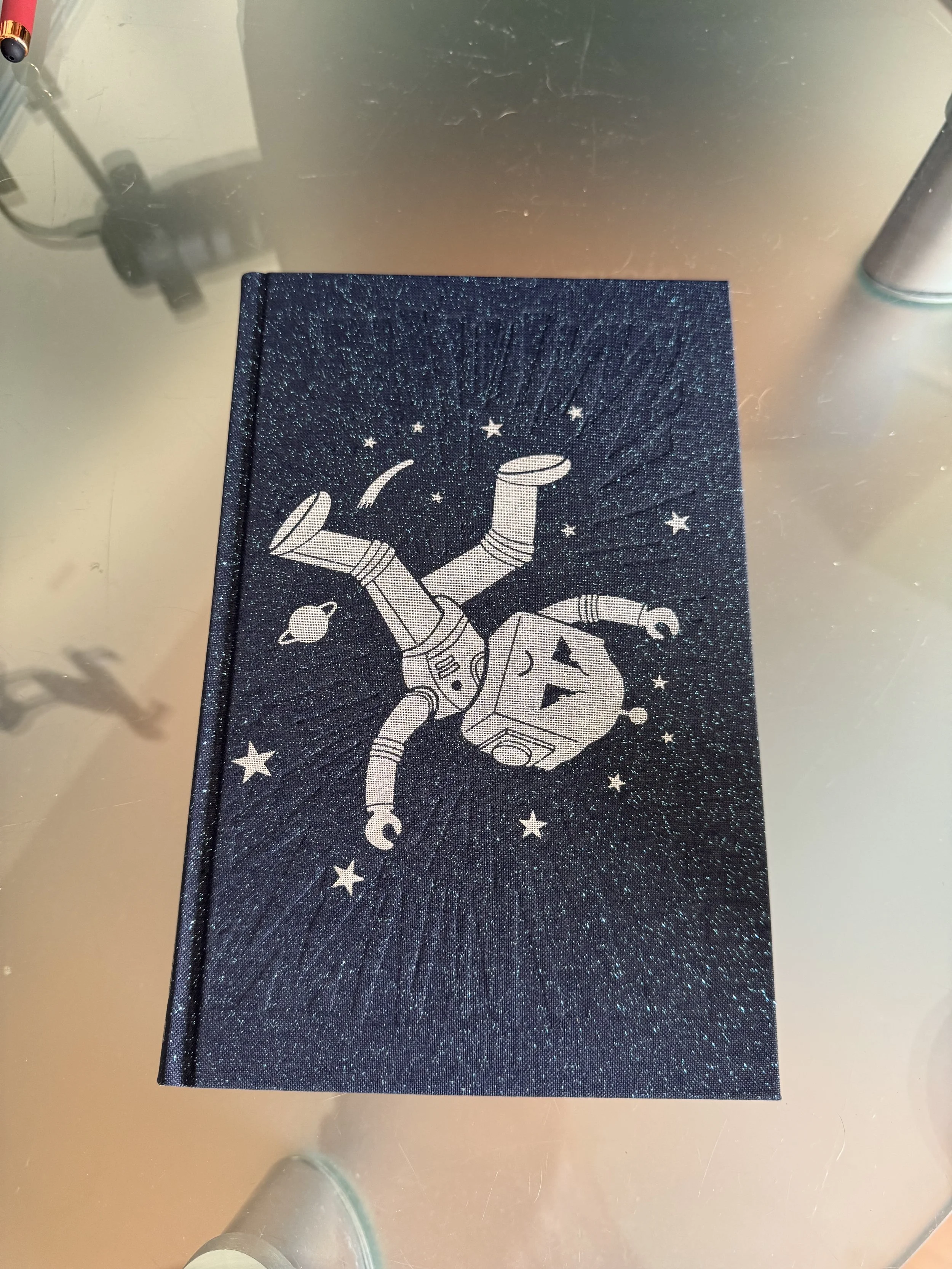
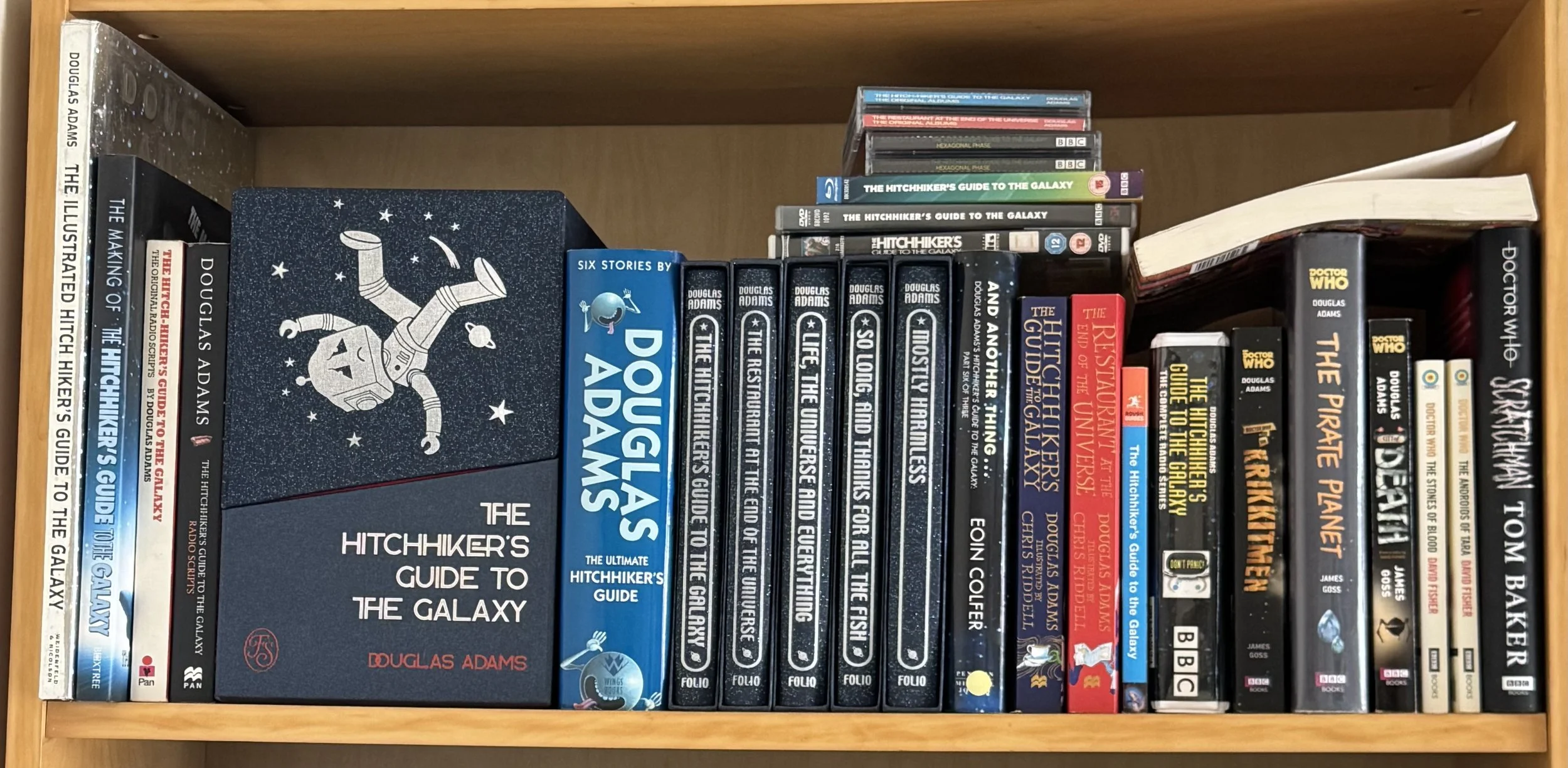
Recently I decided to buy a beautiful Folio Society edition, partly because I'm now at a stage of life where I can afford to collect books that have genuinely meant something to me.
I'm glad I did.
The comedy has aged remarkably well. The famous moments are still funny, the dialogue still sparkles, and Adams' wonderfully ridiculous observations about bureaucracy, politics and humanity feel just as relevant today.
Reading it as an adult, though, I found myself paying far more attention to the characters than I ever had before.
Arthur Dent remains the perfect reluctant hero - an ordinary man trying to navigate extraordinary circumstances without ever really understanding what's happening. Ford Prefect is effortlessly adaptable, while Marvin is still one of fiction's greatest comic creations; endlessly pessimistic yet strangely heroic. Zaphod Beeblebrox, meanwhile, now feels less like an outrageous caricature and more like a type of political leader we've become rather familiar with over the past decade.
Beneath all the humour are questions that stay with you long after you've closed the book.
Why are we here?
What really matters?
Is there even an answer?
As a teenager, I enjoyed the jokes. As someone in middle age, I found myself thinking much more about the ideas.
Like Frankie Mouse, I still admire curiosity and the pursuit of knowledge. But, also like Frankie, life has taught me that there comes a point where discovering the ultimate truth matters less than simply living well.
That's perhaps the biggest surprise of revisiting this novel after so many years. The book hasn't changed very much.
I have.
GOOD Verdict
One of the rare books that rewards every stage of life. Read it when you're young for the comedy. Read it again decades later for everything hiding beneath the comedy.